
Penguins are popular animals that are always thought of as charming, cute, and fun. They often grace our screens in the movies or in cartoons where they are given human-like personalities, with some even dancing and singing.
It’s precisely these portrayals (although we are not against them) that make us forget that penguins are birds and they are expected to behave as such.
So, are they friendly? Let’s find out!
They can be, depending on a lot of different factors.
Here’s Why Penguins Can Be Friendly:
Penguins can be friendly, however, it depends on several factors. They can be curious about humans, but don’t expect them to always flock your way or to pet them outright. Some penguins will waddle right up to a group of humans, and they don’t tend to view us as predators. Others are known to be aggressive when they feel threatened or will simply run away.

Are All Penguins Friendly?
Penguins are very complicated birds. Given that there are 18 different species overall, it’s not simple to give a single answer to whether they are friendly or not. Each species has varying characteristics and personalities.
They also live in varying regions of the world, both in captivity and in the wild. You can expect that they can either be very friendly or not show much interest, depending on their habitat or temperament.
Those raised in captivity or living in well-populated areas are generally more approachable. In contrast, those raised in the wild might show more caution.
In terms of if they are friendly to other animals, it again all depends. On land, they have no natural predators. This means they don’t typically react in a particularly fearful or aggressive manner there. It all again depends on their temperament and habitat.
In the water, they aren’t very friendly to small fish as they typically make those a meal! Penguins do have natural predators in the water, so they generally are more cautious there. They always need to be aware in case seals or killer whales or on the hunt.
Are Baby Penguins Friendly?
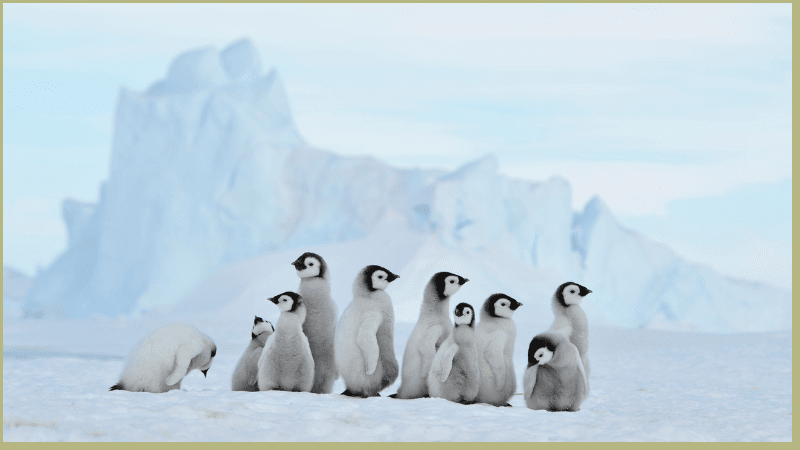
Baby penguins, in general, can be curious about humans. To further our point above, penguins born and raised in captivity may be somewhat friendly to humans, but those in the wild may have a completely different reaction.
So, a baby penguin raised in the zoo or an ocean park may have no problem getting close to humans. However, those in the wild may be curious about humans at first but, after some time, may get bored with you. They’ll just walk away and lose interest. Some will feel threatened and run away, and that’s if their parents don’t try to attack you first.
Don’t expect baby penguins to run your way when they see you like a dog would. It just doesn’t work that way.
Humans are neither perceived as predators nor overly attractive to penguins, which explains their reaction (or no reaction) towards us.
Are Penguins Friendly to Humans?
Are all penguins like Mumble? A cute and cuddly penguin who loves to dance? Well, not really.
How do penguins view us, humans?
Let’s start with the penguins that are living in, say, Antarctica. These penguins, as expected, don’t see a lot of humans. Maybe some scientists from time to time, but not too many.
If penguins in the wild don’t see humans very often, then you can’t really expect them to know how to interact with you. Ornithologists have observed that most penguins in the wild won’t even take a second glance at you and will go about their day.
If they keep on seeing you, though, then you’ll just be considered a daily visitor with their gear.
Are penguins, in general, afraid of humans? Nope, they are not! They very rarely feel the need to attack humans, either.
Now, let’s discuss penguins in captivity or in manmade sanctuaries. How do they behave towards humans?
It turns out that penguins living in captivity from hatching to growing up are the friendliest to humans. Experts say that they may even treat their human caretakers as friends or acquaintances.
But, these penguins make up a relatively small sample size, and this behavior does not really differ from most other animals’ behavior towards humans when born and bred in zoos or parks.
Do Penguins Like To Be Petted?
Do penguins like it when you try to pet them? Not too much.
Penguins, especially those in the wild, are not too fond of being petted because, believe it or not, they can be pretty anti-social. This is quite contradicting given that they always travel and live in groups.
Have you tried petting a bird? You’ll most likely get the same reaction. It’s either they’ll fly away, walk away, or try to peck you when they feel threatened. Let’s hope it’s not the latter.
Penguins that are living in facilities, though, may not mind a gentle petting. We know that a lot of you would love to touch or feel a penguin’s feathers. You’ll probably be surprised to know that they are not as squishy or soft as you thought they’d be.
There are places, such as petting zoos, where they will allow you to pet penguins, which can be an animal lover’s dream. But, these places are strict when it comes to rules involving petting penguins.
Pet a penguin in the wrong area and might be left with some pain.
Penguins can weigh up to 90 pounds, and a penguin that size will undoubtedly have strong wings and beaks, which they can use to strike. So, do be careful when attempting to pet one, and always seek guidance. Although not recommended, rarely do people get a chance to hug a penguin under strict supervision.
Please remember that penguins don’t naturally enjoy being touched by humans. They don’t see it as a loving act, so it is preferable to let them be and observe them from a distance if you have the opportunity to see them.
Conclusion: Are Penguins Friendly?
While we still don’t know all there is to know about penguins, we can gather that those born and raised in captivity can be friendly, while those in the wild are more likely to be cautious.
Keep on exploring, and maybe one day, your love for penguins will bear fruit.
It’s always important to remember that not all penguins think and feel alike towards humans. Be careful when coming closer to one and always ask for an expert or guide’s advice.

